Exploring The 4Cs Of Diamond Quality

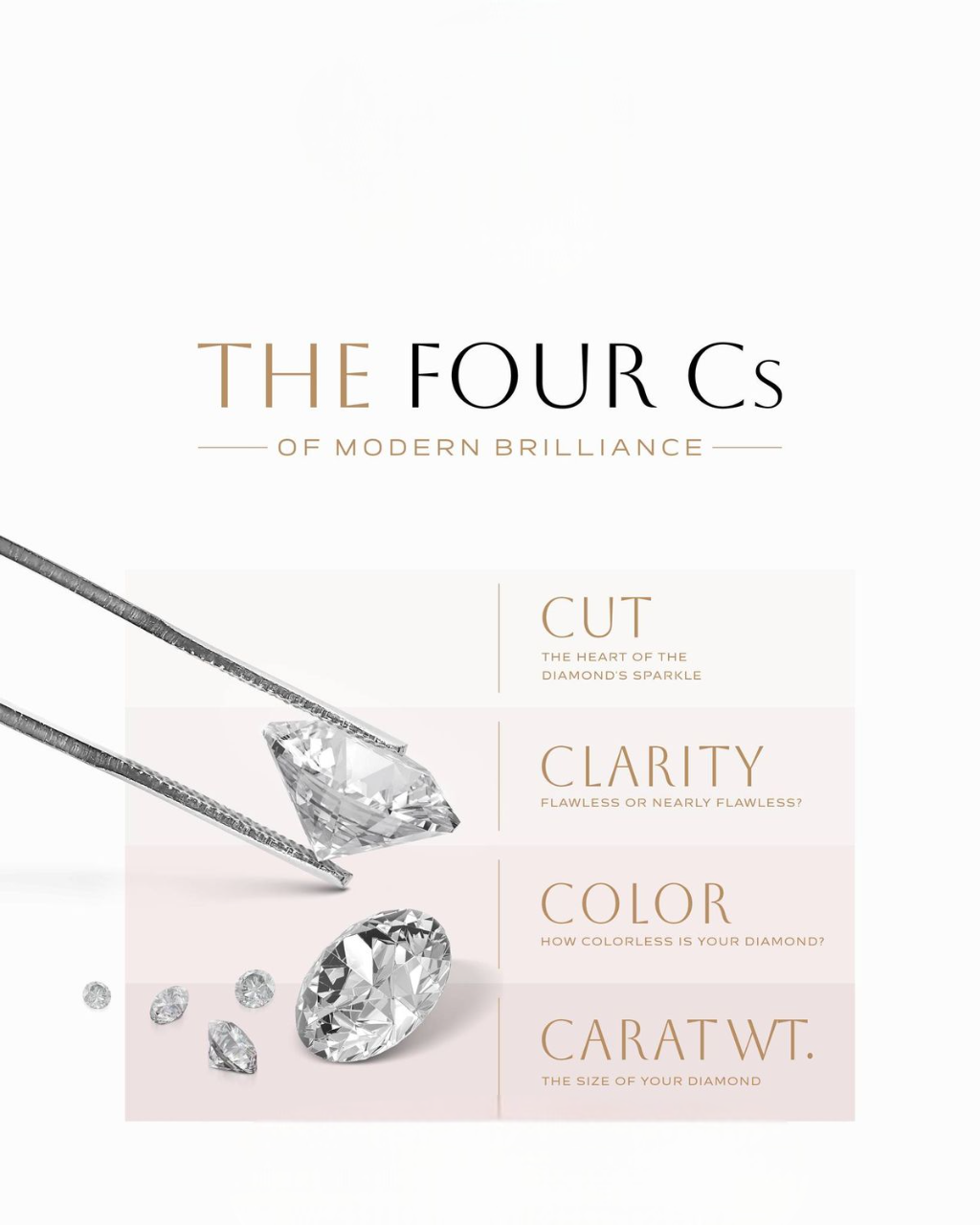
Each of the 4 C’s of diamonds (Cut, Color, Clarity and Carat) play a role in a diamond’s beauty

The 4Cs of
diamond quality.

Diamonds are graded worldwide by the “4 Cs” – Cut, Clarity, Color, and Carat – which collectively determine a stone’s quality and value. Understanding these factors is essential for anyone shopping for diamonds, whether you’re a jewelry retailer or a savvy consumer. We’ll break down each “C,” explain how it affects a diamond’s beauty and price, and even compare pricing in India versus global markets. At Nakassi, we combine traditional craftsmanship with modern expertise, ensuring every diamond meets high standards in each of the 4 Cs.

These four qualities of a diamond are the key components that impact its beauty and structure. The 4C’s interact with each other within the diamond. They dictate how the diamond appears and how high quality it is. As an example, the diamond’s ability to reflect light back to your eyes depends primarily on cut quality but also on color and clarity.
Diamond
Diamond Color

Diamond Color

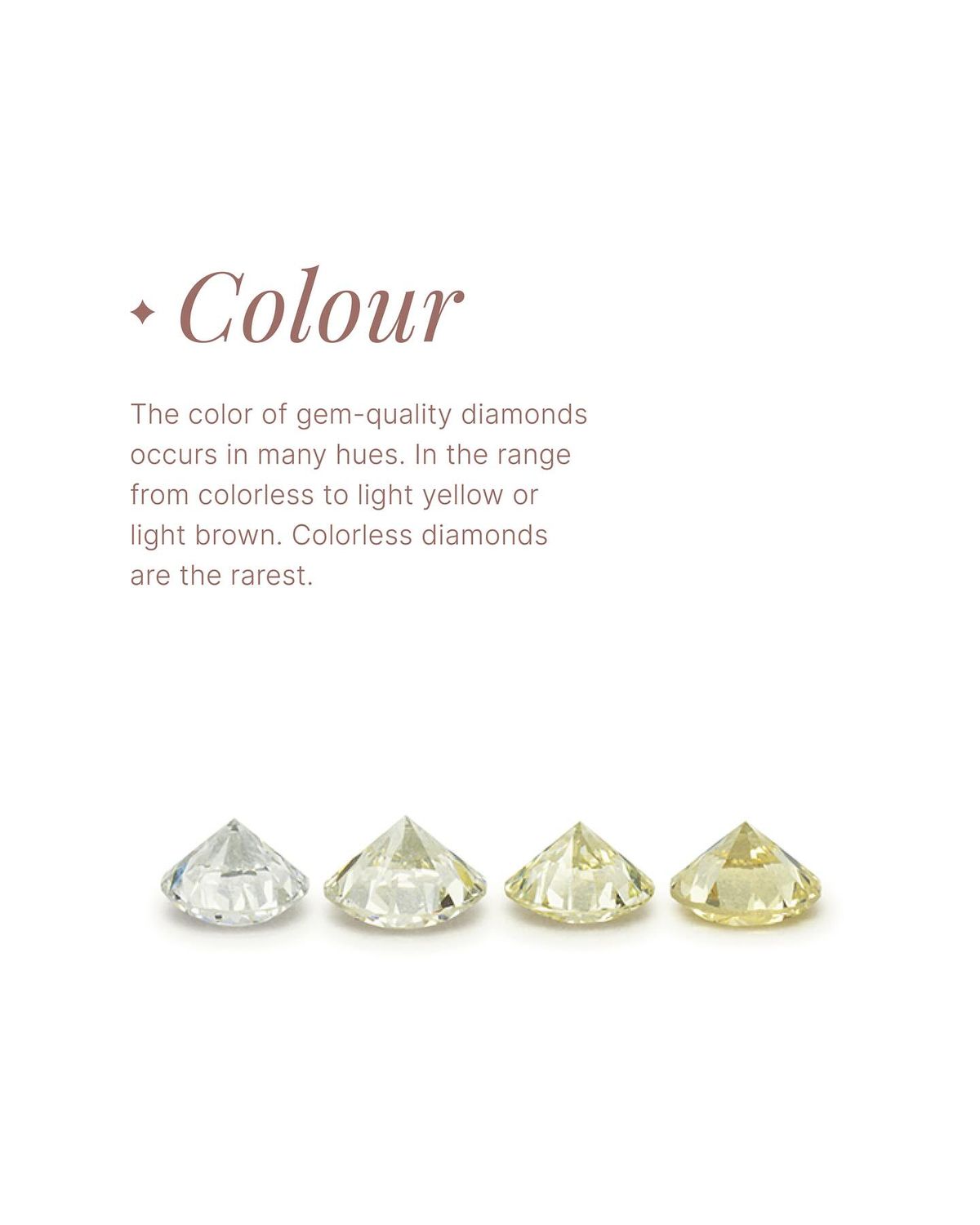
Diamond color refers to the natural tint found in white diamonds. The less color a diamond has, the higher its quality and value — because colorless diamonds allow more light to pass through, enhancing brilliance and sparkle.

A chemically pure and structurally perfect diamond is perfectly transparent with no hue, or color. However, in reality almost no gem-sized natural diamonds are absolutely perfect.

The scale ranges from D (totally colorless) to Z (pale yellow/brown). Brown diamonds darker than K are labeled with a grade like “M Faint Brown”. Beyond Z, they are called fancy color diamonds.

Often when we talk about diamond color, we are actually talking about the absence of color. As subtle as color distinction may be, color variations from the most obvious to subdued can drastically alter diamond quality and price.

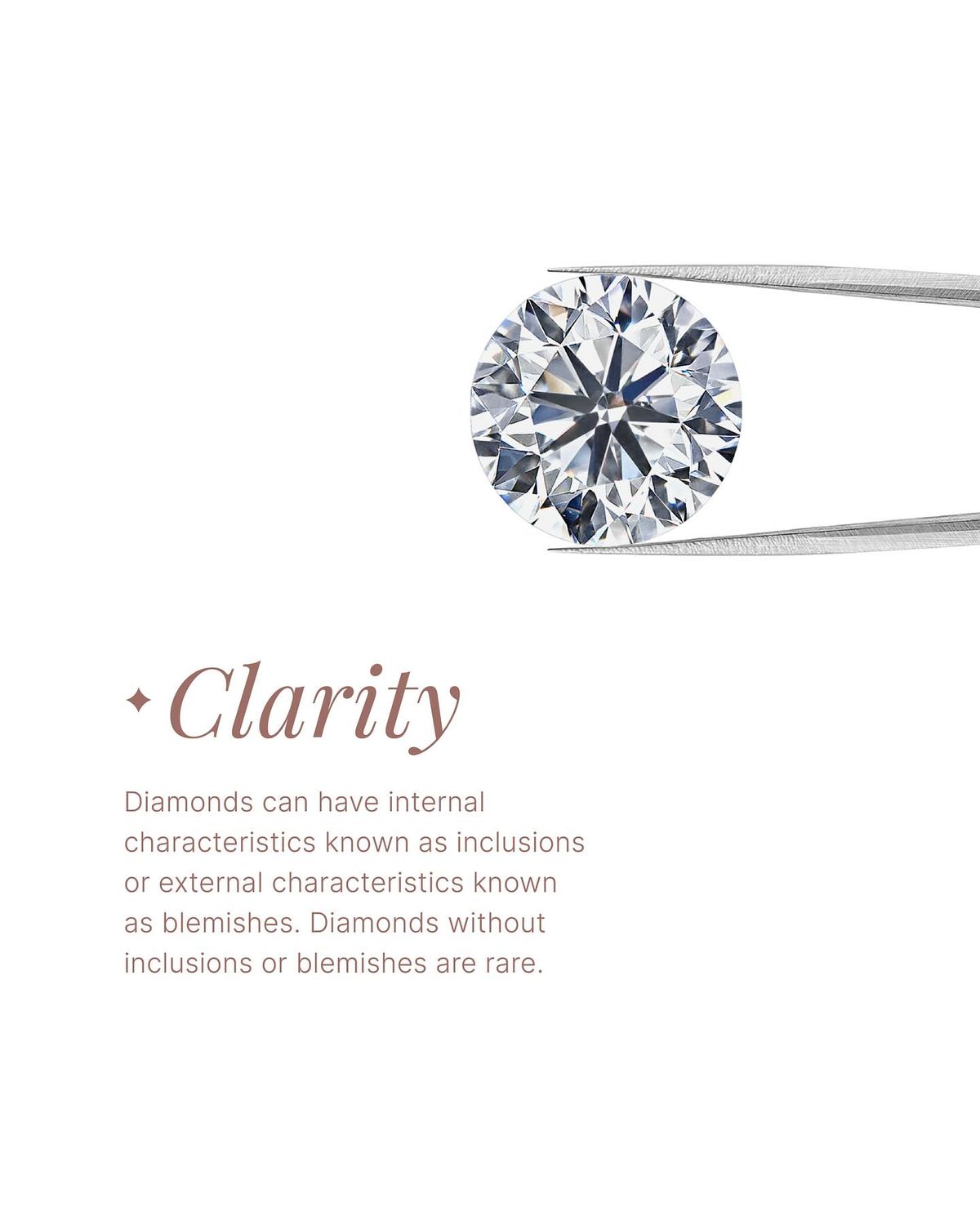
Diamond Clarity

Diamond clarity is a crucial aspect that evaluates a diamond’s relative freedom from internal and external characteristics which may have formed during its natural or laboratory grown creation, subsequent polishing, or through wear over time. Understanding a diamond clarity scale chart is essential for appreciating a diamond’s true beauty and determining its worth.

The clarity of a diamond is based on the size, location, visibility and number of inclusions or blemishes.

The GIA Diamond Clarity Scale is the global language for diamond clarity grading. Wherever you go in the world, whatever language is spoken, when buying a diamond, today you will likely hear terms like VVS1 or SI2 used to describe clarity.

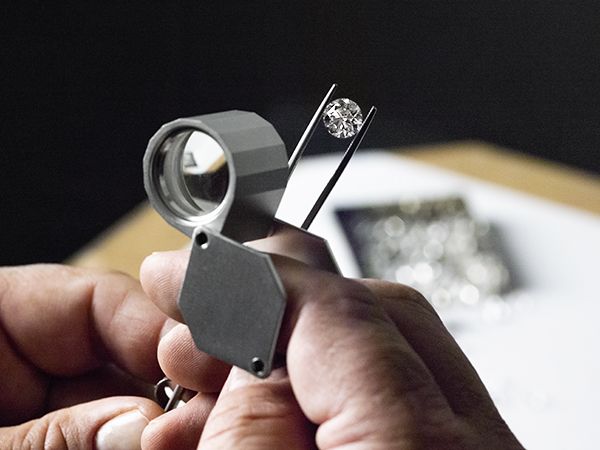
Grading clarity should be left to a skilled grader. Defining precise categories and issuing a standard system for clearly defined ratings, the GIA Clarity Scale consists of categories ranging from Flawless to Included, and it contains 11 specific grades.

Diamond Clarity
Diamond Cut

Diamond Cut

A diamond cut is a style or design guide used when shaping a diamond for polishing such as the brilliant cut.

The cut of a diamond is a question of craftsmanship. When you hear words like Brightness, Scintillation and Fire, they describe how masterfully a diamond is cut.

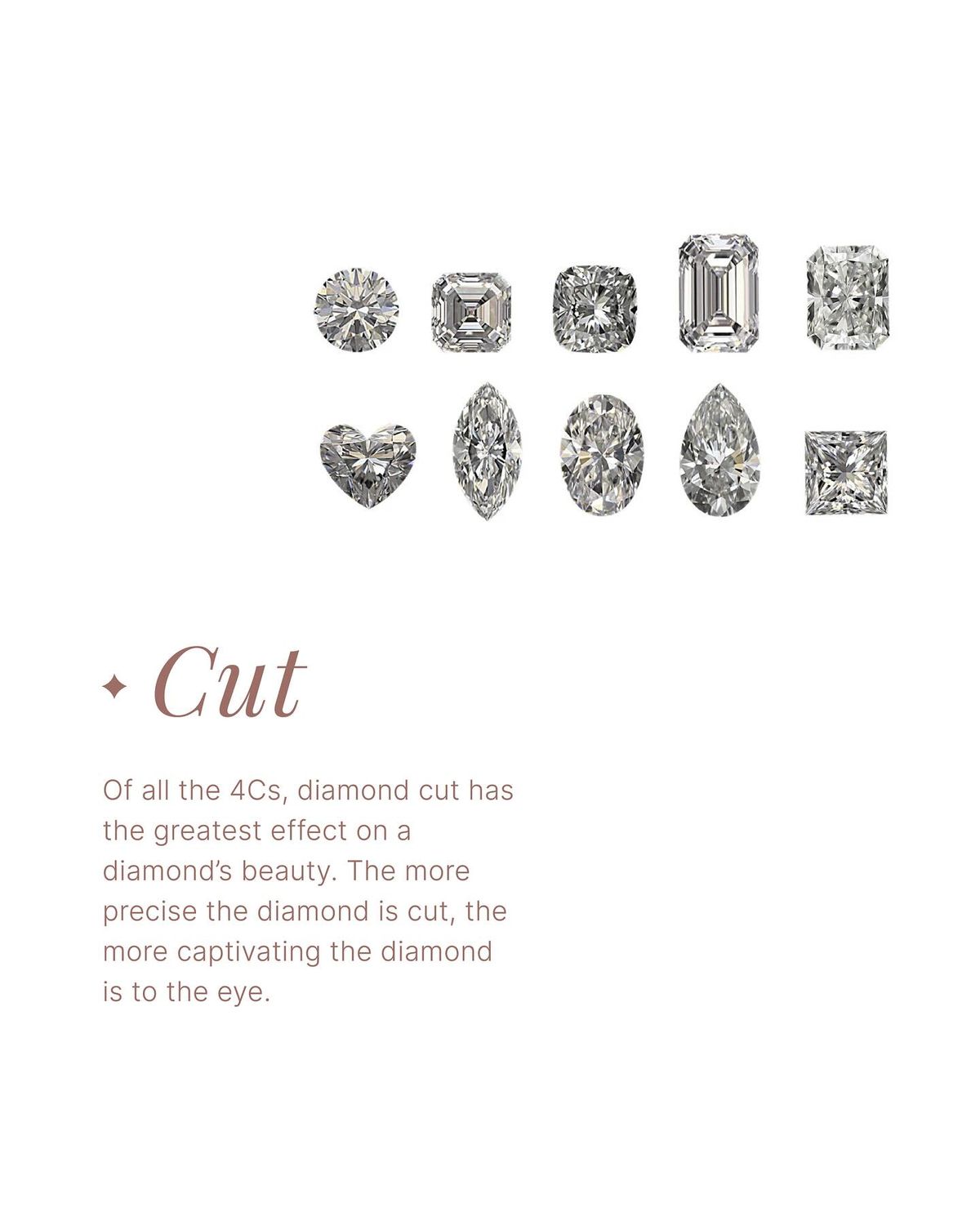
A diamond’s cut refers to how it interacts with light. While a term like oval would refer to the shape, or outline of a diamond, cut also describes the overall design of a diamond, including the arrangement and proportions of the diamond’s facets.

All other shapes are referred to as fancy shapes, which includes marquise, emerald, pear, oval, hearts and even triangles.

Proportions impact the face-up appearance, allure and attractiveness of diamonds. There are many components to consider when assessing the overall cut quality of a round brilliant diamond, one of which is the individual’s preference.

Diamond Carat Weight

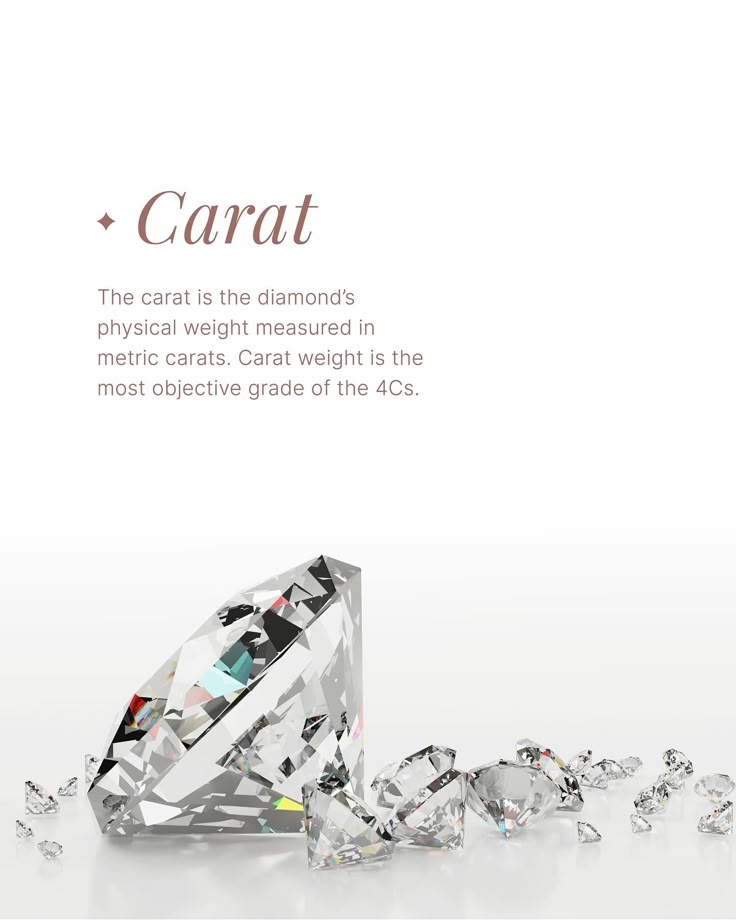
Carat weight serves as one of the most significant measures in determining the value of a diamond. Carat weight not only affects the diamond's cost but also plays a crucial role in its overall appearance. It's important to know that diamonds of different shapes may look different in size even if they have the same carat weight.

For instance, a round diamond may appear smaller than an emerald cut diamond of the same weight due to differences in depth and faceting.

The term carat weight comes from carob seeds and has been in use since the 1500s. Early gem traders used to use small uniform seeds to counterweight their scales. Today a carat is a standard milligram measurement of weight, recognized and used globally.

This means that in terms of Carat weight, a half-carat (1/2) diamond is equal to 50 points OR 0.50 carat diamond, and a quarter-carat (1/4) diamond is equal to 25 points OR 0.25 carat diamond. A 1.08 carat stone, for example, would be referred to as ‘one point eight carats.’

Diamond Carat